
“Ancient Wisdom for Modern Life”
Sharad Navratri 2026: Complete Guide to the 9 Nights of Maa Durga
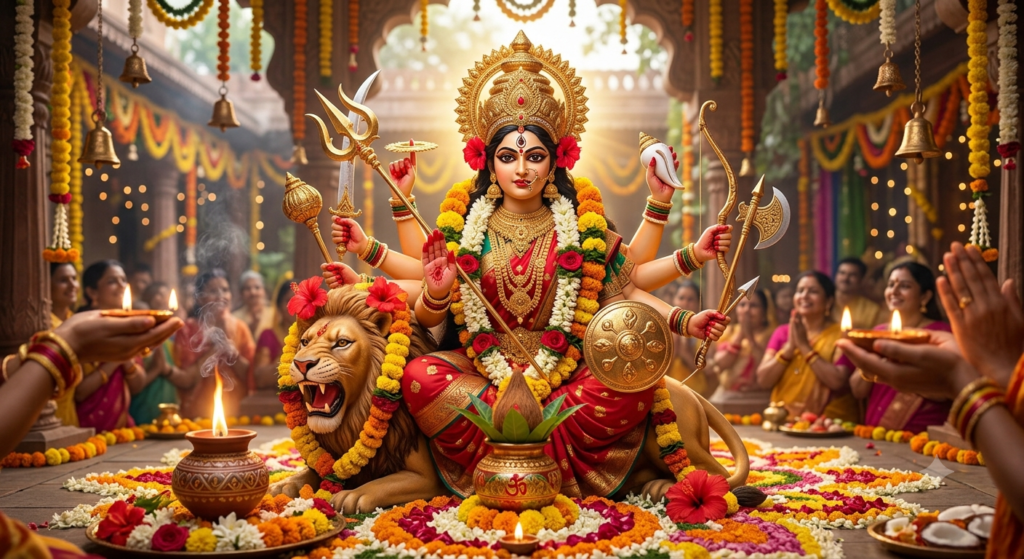
Sharad Navratri is the most awaited of the four Navratris in the Hindu calendar — nine nights dedicated to the nine forms of Maa Durga (Navadurga), celebrated with fasting, Garba, Dandiya, and deep devotion across India. In 2026, Sharad Navratri begins on Sunday, October 11 with Ghatasthapana, and concludes with Vijayadashami (Dussehra) on Tuesday, October 20.
This guide covers the full 9-day calendar, the Navadurga forms and their significance, daily colours, puja vidhi, do’s and don’ts, and answers to the most commonly searched questions.
Note: A few Panchang sources show slightly different start/end dates this year (Oct 10–19 or Oct 12–21) depending on the tithi calculation method used. The dates below follow the most widely referenced Panchang readings — always confirm the exact Ghatasthapana muhurat for your city closer to the date.
Sharad Navratri 2026: 9-Day Calendar
| Day | Date (2026) | Devi Form | Colour |
|---|---|---|---|
| Day 1 | Sun, Oct 11 (Ghatasthapana) | Shailaputri | Yellow |
| Day 2 | Mon, Oct 12 | Brahmacharini | Green |
| Day 3 | Tue, Oct 13 | Chandraghanta | Grey |
| Day 4 | Wed, Oct 14 | Kushmanda | Orange |
| Day 5 | Thu, Oct 15 | Skandamata | White |
| Day 6 | Fri, Oct 16 | Katyayani | Red |
| Day 7 | Sat, Oct 17 | Kalaratri | Royal Blue |
| Day 8 | Sun, Oct 18 (Durga Ashtami) | Mahagauri | Pink |
| Day 9 | Mon, Oct 19 (Maha Navami) | Siddhidatri | Purple |
| Day 10 | Tue, Oct 20 | Vijayadashami (Dussehra) | — |
The 9-colour sequence is a popular media tradition (published by newspapers and Panchang sites each year) rather than a scriptural rule, and the exact order can vary slightly by source — treat it as a fun way to participate, not a strict requirement.
Why Sharad Navratri Is Celebrated
Sharad Navratri commemorates the victory of Goddess Durga over the buffalo demon Mahishasura, symbolising the triumph of good over evil. Over nine nights, devotees worship nine distinct forms of the Goddess — each representing a different quality, from courage and discipline to wisdom and abundance — before the festival culminates in Vijayadashami, marking Durga’s victory as well as Lord Rama’s victory over Ravana.
Unlike Chaitra Navratri (which falls in spring and ends with Ram Navami), Sharad Navratri falls in autumn and is considered the primary, most widely celebrated Navratri of the year — which is why it’s also called Maha Navratri in many regions.
The Nine Forms of Maa Durga (Navadurga)
- Shailaputri — Daughter of the mountains; represents strength and new beginnings.
- Brahmacharini — Represents penance, discipline, and devotion.
- Chandraghanta — The warrior form; represents courage and grace.
- Kushmanda — Believed to have created the universe with her smile; represents creative energy.
- Skandamata — Mother of Lord Kartikeya; represents nurturing and protection.
- Katyayani — A fierce warrior form, born to destroy evil; represents righteous strength.
- Kalaratri — The fiercest form, destroyer of darkness and fear.
- Mahagauri — Represents purity, peace, and forgiveness.
- Siddhidatri — Bestower of supernatural powers and spiritual wisdom.
Ghatasthapana: What It Means
Ghatasthapana (also called Kalash Sthapana) is the ritual that opens Navratri on Day 1. A sacred kalash (pot), usually filled with water and topped with mango leaves and a coconut, is installed as a symbol of the Goddess’s presence in the home. Barley seeds are often sown in a tray beside it — their growth over the nine days is traditionally seen as a sign of prosperity for the year ahead.
The muhurat (auspicious time window) for Ghatasthapana is specific to each day and city, so it’s best to check a local Panchang for the exact time rather than relying on a generic time across India.
Navratri Puja Vidhi (Step-by-Step)
- Clean the puja area and place the Kalash with water, mango leaves, and a coconut on top.
- Sow barley seeds in a small tray of soil beside the Kalash.
- Install an idol or image of Maa Durga near the Kalash.
- Light a ghee diya (many households keep an Akhand Jyot burning for all nine nights).
- Offer flowers, roli, and akshat (rice) to the Goddess each day.
- Recite the day’s Devi mantra or read from the Durga Saptashati.
- On Ashtami or Navami, perform Kanya Pujan — worshipping young girls as forms of the Goddess, offering them food and gifts.
- Perform aarti each evening as a family.
Do’s and Don’ts for Navratri 2026
Do’s:
- Do perform Ghatasthapana within the correct muhurat window for Day 1 — this is considered important for the rest of the festival’s energy.
- Do keep the Akhand Jyot (continuous lamp) in a safe, stable spot away from curtains or drafts if you choose to light one for all nine nights.
- Do wear the day’s colour if you enjoy the tradition — it’s a lighthearted, modern custom rather than a mandatory ritual.
- Do perform Kanya Pujan with genuine respect and warmth, not as a rushed formality.
- Do maintain a sattvic (pure, simple) diet during the fasting days if you’re observing a fast.
Don’ts:
- Don’t leave the Akhand Jyot unattended for long periods — fire safety comes first.
- Don’t cut hair, nails, or shave during the nine days, as per traditional practice, if you are observing the fast strictly.
- Don’t consume onion, garlic, or non-vegetarian food during the fasting period, as these are considered tamasic (heavy/impure) in Navratri dietary tradition.
- Don’t skip the barley tray if you’ve started one — let it grow undisturbed through all nine days.
- Don’t treat Kanya Pujan as optional if you’ve committed to the full nine-day ritual — it’s considered the culmination of the fast.
Frequently Asked Questions
Q1: When does Sharad Navratri 2026 start and end? Sharad Navratri 2026 begins on Sunday, October 11 with Ghatasthapana and concludes with Vijayadashami (Dussehra) on Tuesday, October 20.
Q2: What is the difference between Durga Ashtami and Maha Navami? Durga Ashtami falls on Day 8 (October 18, 2026) and Maha Navami on Day 9 (October 19, 2026). Both days are significant for Kanya Pujan, though some households perform it on Ashtami and others on Navami depending on family tradition.
Q3: What is Ghatasthapana and why is it important? Ghatasthapana is the ritual installation of a sacred kalash on Day 1 of Navratri, marking the Goddess’s presence in the home. It’s considered the foundation ritual that sets the tone for the entire nine-day observance.
Q4: Are the 9 Navratri colours the same every year? No. The colour sequence is often tied to the weekday Navratri begins on, and different publications sometimes list slightly different sequences. Treat the colour chart as a fun tradition rather than a fixed rule.
Q5: Can I observe Navratri without fasting all nine days? Yes. Many devotees fast only on specific days (such as the first, eighth, and ninth) or observe a partial fast. The sentiment and consistency of daily worship matter more than a strict full fast.
Q6: Is Sharad Navratri the same as Durga Puja? They fall during the same nine days and honour the same Goddess, but Durga Puja (especially prominent in Bengal) has its own distinct rituals and community celebration style, centred heavily around the last five days — Shashthi to Dashami.