
“Ancient Wisdom for Modern Life”
Diwali 2026: Complete Guide to the 5-Day Festival of Lights
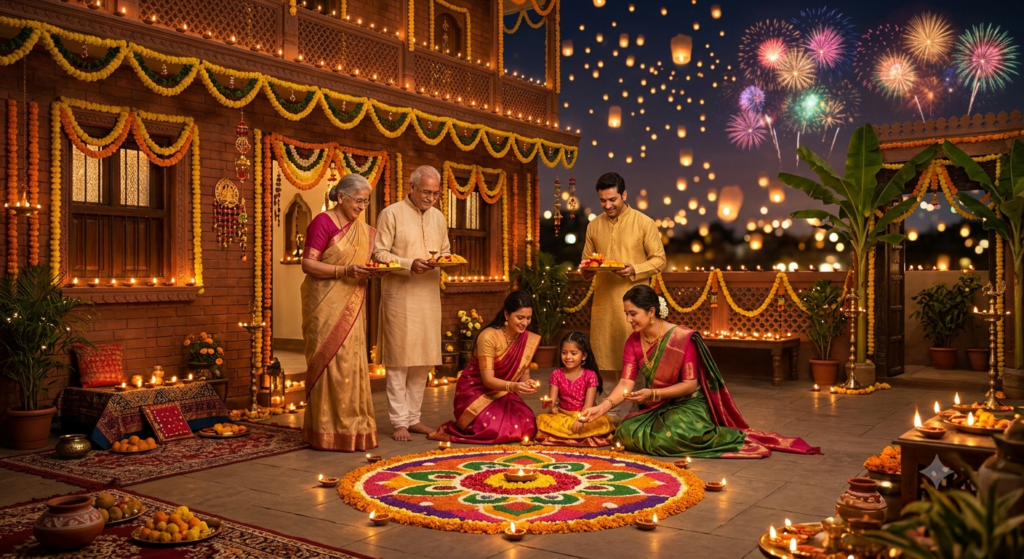
Diwali is the festival every household waits for all year — new clothes, cleaned homes, rangoli at the door, and diyas lighting up every corner. In 2026, Diwali (Lakshmi Puja) falls on Sunday, November 8, and like every year, it isn’t just one day — it’s a five-day celebration that begins with Dhanteras and ends with Bhai Dooj.
This guide covers all five days, their significance, puja vidhi, do’s and don’ts, and answers to the questions people search for most every year around this time.
Diwali 2026: Complete 5-Day Date List
| Day | Festival | Date (2026) |
|---|---|---|
| Day 1 | Dhanteras | Friday, November 6 |
| Day 2 | Choti Diwali (Naraka Chaturdashi) | Saturday, November 7 |
| Day 3 | Diwali (Lakshmi Puja) | Sunday, November 8 |
| Day 4 | Govardhan Puja | Monday, November 9 |
| Day 5 | Bhai Dooj | Tuesday, November 10 |
Note: Exact muhurat timings for Lakshmi Puja depend on your city’s sunset and Pradosh Kaal. Always confirm the precise auspicious window for your location closer to the date using a reliable Panchang.
Why Diwali Is Celebrated
Diwali marks the return of Lord Rama to Ayodhya after 14 years of exile, following his victory over Ravana. The people of Ayodhya are said to have lit rows of diyas (oil lamps) to welcome him home — which is where the festival gets its name, “Deepavali,” meaning a row of lights.
The festival also marks the day Goddess Lakshmi, the deity of wealth and prosperity, is worshipped in homes and businesses, which is why Lakshmi Puja is the most important ritual of the five days.
Day-by-Day Significance
Dhanteras — Dedicated to Lord Dhanvantari, the god of health and Ayurveda, and considered auspicious for buying gold, silver, or new utensils. Many households also welcome wealth into the home by lighting a diya at the entrance in the evening.
Choti Diwali (Naraka Chaturdashi) — Marks Lord Krishna’s victory over the demon Narakasura. People do an early oil bath (abhyanga snan) before sunrise on this day, believed to cleanse both body and sins.
Diwali (Lakshmi Puja) — The main day. Homes are decorated with diyas and rangoli, and Lakshmi Puja is performed in the evening during Pradosh Kaal to invite prosperity into the home for the year ahead.
Govardhan Puja — Celebrates Lord Krishna lifting the Govardhan hill to protect villagers from Indra’s wrath. Food offerings (Annakut) are prepared and offered as a mark of gratitude.
Bhai Dooj — Celebrates the bond between brothers and sisters, similar in spirit to Raksha Bandhan. Sisters perform aarti for their brothers and pray for their long life, and brothers offer gifts in return.
Lakshmi Puja Vidhi (Step-by-Step)
- Clean the house thoroughly before sunset and place rangoli at the entrance.
- Set up the puja area with an idol or image of Goddess Lakshmi and Lord Ganesha together.
- Light a ghee diya and incense sticks before starting the puja.
- Offer flowers, roli, akshat (rice), and sweets to the deities.
- Recite the Lakshmi Puja mantras or Lakshmi Chalisa.
- Perform aarti as a family once the main puja is complete.
- Keep diyas lit at the entrance and around the house through the night.
Do’s and Don’ts for Diwali 2026
Do’s:
- Do clean and declutter your home before Dhanteras — it’s considered inauspicious to welcome Lakshmi into a messy home.
- Do keep the main door open or well-lit during Lakshmi Puja, symbolically welcoming prosperity in.
- Do perform Lakshmi Puja during Pradosh Kaal (evening, just after sunset) for the most auspicious effect.
- Do give to those in need during this period — charity is considered highly auspicious around Diwali.
- Do use eco-friendly diyas and, where possible, avoid excessive firecrackers for a safer, more sustainable celebration.
Don’ts:
- Don’t sweep or clean the house late at night on Diwali itself — cleaning is meant to happen before, not during, the puja.
- Don’t wear black on Diwali; it’s traditionally considered an inauspicious colour for this festival.
- Don’t leave diyas unattended near curtains or flammable material — fire safety matters more than tradition here.
- Don’t start new financial ventures or lend money on Diwali night itself, according to traditional belief.
- Don’t skip the Ganesha idol/image alongside Lakshmi during puja — the two are worshipped together for a reason, symbolising wisdom alongside wealth.
Frequently Asked Questions
Q1: What is the date of Diwali in 2026? Diwali (Lakshmi Puja) falls on Sunday, November 8, 2026.
Q2: Why is Diwali celebrated over 5 days instead of just one? Each of the five days carries its own significance — health and wealth (Dhanteras), victory over evil (Choti Diwali), prosperity (Lakshmi Puja), gratitude (Govardhan Puja), and family bonds (Bhai Dooj) — together forming a complete cycle of blessings.
Q3: What is the best time for Lakshmi Puja on Diwali 2026? Lakshmi Puja is traditionally performed during Pradosh Kaal, shortly after sunset on November 8. The exact muhurat window varies by city, so check a Panchang specific to your location closer to the date.
Q4: Can Diwali diyas be lit before sunset? Diyas at the entrance can be lit in the evening as dusk approaches, but the main Lakshmi Puja itself should be performed during the auspicious Pradosh Kaal window, not earlier in the day.
Q5: What should not be done on Diwali day? Avoid wearing black, avoid loud arguments or negativity in the home, don’t leave diyas unattended, and avoid starting new loans or major financial commitments on the day itself, as per tradition.
Q6: Is Govardhan Puja the same as Diwali? No. Govardhan Puja is a separate day within the 5-day Diwali festival, falling the day after main Diwali (November 9, 2026), dedicated specifically to Lord Krishna and the Govardhan hill legend.
This guide will be updated closer to November 2026 with exact city-wise Lakshmi Puja muhurat timings.