
“Ancient Wisdom for Modern Life”
Sawan 2026 Calendar: North vs. South Dates, Somwar Vrat Schedule, and Shivling Abhishek Guide
The holy month of Shravan (Sawan), dedicated entirely to the cosmic destroyer and transformer, Lord Shiva, is considered the most spiritually potent period of the year. For seekers tuning into the Vaydik Cosmos, Sawan is a cosmic window where the environment is saturated with Shiva Tattva (divine Shiva energy), making prayers, fasting, and meditation exceptionally rewarding.
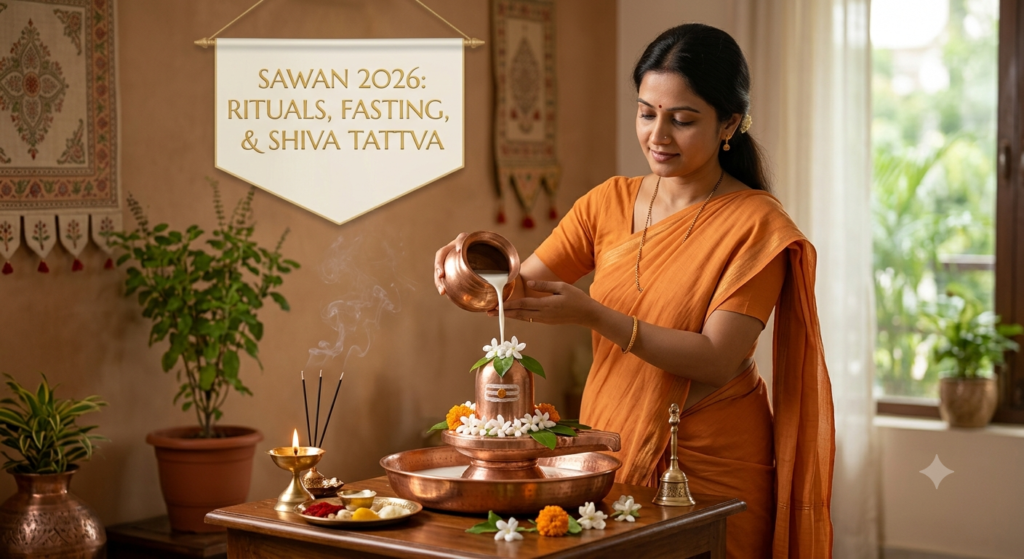
However, because the Hindu lunar calendar is calculated differently across various regions of India, there is always immense confusion regarding the exact start and end dates. In this comprehensive guide, we demystify the 2026 Sawan timeline, list the critical Monday fasting (Somwar Vrat) dates, and provide a step-by-step Vedic ritual guide for your home altar.
📅 Sawan 2026 Start and End Dates: Regional Calendars Explained
India primarily follows two lunar calendar systems: Purnimant (predominant in North India, where the month ends on a full moon) and Amavasyant (predominant in Western and Southern India, where the month ends on a new moon).
To ensure your rituals align perfectly with your regional cosmos, use this verified 2026 timeline:
1. North Indian States (Purnimant Calendar)
Includes Uttar Pradesh, Bihar, Madhya Pradesh, Rajasthan, Himachal Pradesh, Punjab, and Haryana.
- Sawan 2026 Start Date: Saturday, July 18, 2026
- Sawan 2026 End Date: Saturday, August 15, 2026
2. Western & Southern Indian States (Amavasyant Calendar)
Includes Maharashtra, Gujarat, Karnataka, Andhra Pradesh, Telangana, and Tamil Nadu.
- Sawan 2026 Start Date: Thursday, July 30, 2026
- Sawan 2026 End Date: Friday, August 28, 2026
🗓️ Sawan Somwar Vrat (Monday Fasting) Dates for 2026
Fasting on Sawan Mondays is one of the most revered practices in Vedic tradition, believed to grant mental peace, martial harmony, and spiritual clarity. Depending on which calendar your region observes, here are the exact dates to observe your fasts:
North India Sawan Somwar Dates (4 Fasts):
- First Sawan Somwar: July 20, 2026
- Second Sawan Somwar: July 27, 2026
- Third Sawan Somwar: August 3, 2026
- Fourth Sawan Somwar: August 10, 2026
West & South India Sawan Somwar Dates (4 Fasts):
- First Sawan Somwar: August 3, 2026
- Second Sawan Somwar: August 10, 2026
- Third Sawan Somwar: August 17, 2026
- Fourth Sawan Somwar: August 24, 2026
🛕 Step-by-Step Shivling Abhishek Vidhi at Home
You do not need to visit a crowded temple to connect with Lord Shiva during Sawan. Mahadev is known as Ashutosh—the one who is easily pleased with simple devotion. Here is a traditional Vaydik protocol to perform a sacred Abhishek (ritual bath) at home:
- Preparation: Wake up early during Brahma Muhurat, cleanse your home, take a bath, and dress in clean, traditional attire (preferably yellow, white, or orange).
- Setting the Altar: Place a brass, copper, or stone Shivling in a wide copper plate (Abhishek Patra) facing the North or East direction.
- The Panchamrit Bath: Offer the five elements of Panchamrit sequentially while chanting “Om Namah Shivaya” or the Mahamrityunjaya Mantra:
- Raw Milk: For purity and longevity.
- Curd: For prosperity and stability.
- Honey: For sweet speech and inner joy.
- Ghee: For physical strength and victory over negativity.
- Sugar/Jaggery: For the removal of planetary obstacles.
- The Pure Water Flush: Cleanse the Shivling thoroughly by pouring a continuous stream of pure Gangajal or filtered water.
- The Vaydik Offerings: Adorn the Shivling with Chandan (sandalwood paste), Bhasma (sacred ash), Akshat (unbroken rice grains), and offer Belpatra (three-leaf bael leaves, ensuring the smooth side touches the deity).
- Aarti & Meditation: Light a ghee lamp and incense, perform the Shiva Aarti, and spend 10 minutes in silent meditation, visualizing the stillness of the cosmos.
🍽️ Sawan Fasting Rules: What to Eat and Avoid
To maintain physical purity (Sattvatva) and boost your digestive health during the humid monsoon season, Vedic scriptures recommend a light, detoxifying diet.
- Foods to Consume: Fresh fruits, milk, curd, buttermilk, nuts, and root vegetables like potatoes and sweet potatoes. For a grain alternative, use Sabudana (sago), Kuttu (buckwheat flour), or Rajgira (amaranth flour) cooked strictly with Sendha Namak (rock salt).
- Foods to Strictly Avoid: Onion, garlic, grains (wheat, rice, lentils), table salt, mustard oil, eggs, meat, and alcohol. Leafy vegetables like spinach and cabbage are also traditionally avoided during Sawan due to the high insect activity brought on by the monsoons.
❓ Frequently Asked Questions (FAQ)
Q1: Why is Sawan considered the month of Lord Shiva?
According to the Puranas, the churning of the cosmic ocean (Samudra Manthan) took place during this month. Lord Shiva consumed the lethal Halahal poison that emerged from the ocean to save the universe. To cool the burning sensation in His throat, the Devas poured holy water on Him, initiating the eternal tradition of monsoon Shravan Abhishek.
Q2: Can women observe the Sawan Somwar Vrat?
Absolutely. Unmarried women traditionally fast on Sawan Mondays to pray for an understanding, loving life partner (similar to the qualities of Lord Shiva), while married women fast for the long life, health, and prosperity of their husbands and household harmony.
Q3: What is the spiritual significance of offering Belpatra?
The three leaflets of a single Belpatra represent the Trideva (Brahma, Vishnu, and Shiva), the three eyes of Lord Shiva, and the three primordial cosmic attributes (Gunas)—Sattva, Rajas, and Tamas. Offering it symbolizes surrendering your entire ego at the feet of the Divine.