
“Ancient Wisdom for Modern Life”
Jagannath Puri Rath Yatra 2026: Date, Grand Rituals, and Spiritual Secrets of the Chariot Festival
Jagannath Puri Rath Yatra 2026: Official Date, Full Schedule, and Hidden Vaydik Meanings
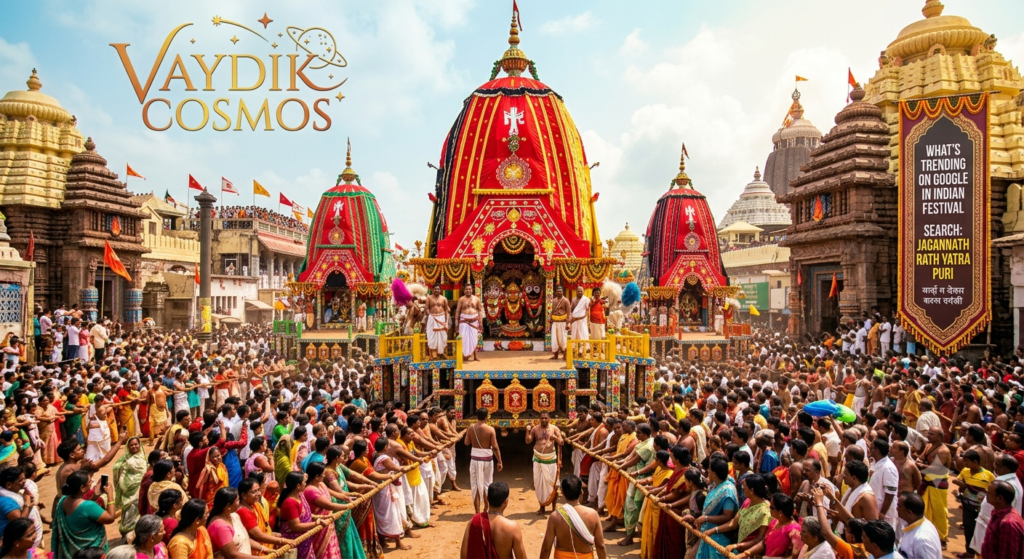
Every year, the coastal town of Puri, Odisha, becomes the epicenter of global spiritual energy during the world-famous Chariot Festival. For a true seeker looking through the lens of the Vaydik Cosmos, this isn’t merely a cultural event—it is the material manifestation of a profound cosmic journey.
In this complete guide, we cover the exact dates, Tithi calculations, ritual timelines, and the esoteric spiritual secrets behind the grand return of Lord Jagannath for 2026.
📅 When is Jagannath Puri Rath Yatra 2026? Official Date & Tithi Timings
The grand Jagannath Puri Rath Yatra begins on Thursday, July 16, 2026. The festival traditionally commences on the Dwitiya Tithi (second day) of the Shukla Paksha (bright fortnight) in the sacred Hindu month of Ashadha.
2026 Dwitiya Tithi Timings:
- Dwitiya Tithi Begins: 11:50 AM on Wednesday, July 15, 2026
- Dwitiya Tithi Ends: 08:52 AM on Thursday, July 16, 2026
- Most Auspicious Chariot Pulling Muhurat: 05:33 AM to 12:00 PM on July 16, 2026
🗓️ The Complete 9-Day Jagannath Rath Yatra 2026 Schedule
The festival is a massive 9-day journey from the primary Shreemandira (Jagannath Temple) to the Gundicha Temple (the deities’ garden house/aunt’s home). Use this verified schedule to track the daily Vaydik rituals:
| Date (2026) | Day of the Ritual | Name of the Sacred Ritual & Cosmic Significance |
|---|---|---|
| June 29 | Monday | Snana Purnima: The deities are bathed with 108 pots of sacred water. |
| June 30 – July 14 | Fortnight | Anasara (Anavasara): The 15-day cosmic isolation phase where the deities “recover from fever” and undergo fresh restoration. |
| July 15 | Wednesday | Gundicha Marjana & Netrotsava: The cleaning of the destination temple and the first public viewing (Nabajouban Darshan) of the restored deities. |
| July 16 | Thursday | Main Rath Yatra Procession: The grand Pahandi (swaying walk) and the pulling of the three massive chariots down Bada Danda. |
| July 20 | Monday | Hera Panchami: Goddess Lakshmi secretly visits the Gundicha Temple, playfully expressing anger at being left behind. |
| July 24 | Friday | Bahuda Yatra (The Return Car Festival): The deities begin their return journey, stopping at the Mausi Maa Temple to eat Poda Pitha (baked pancake). |
| July 25 | Saturday | Suna Besha: The breathtaking ritual where the deities are adorned with over 200 kg of pure gold while still on their stationary chariots. |
| July 26 | Sunday | Adhara Pana: Offering of a sweet, fragrant milk drink to the protective deities of the chariots. |
| July 27 | Monday | Niladri Bije: The final return entry where Lord Jagannath appeases Goddess Lakshmi with rasgullas and enters the inner sanctum . |
🛕 The Vaydik Architecture of the Three Grand Chariots
Every year, three colossal chariots are built entirely from scratch without using a single iron nail, measuring tape, or modern blueprint. The building methods are passed down orally through lineages of Bhoi Sevayats.
1. Nandighosa (Chariot of Lord Jagannath)
- Total Wheels: 16 (representing the 16 phases of the moon and cosmic elements) Trip My Vrindavan
- Height: Approx. 45 feet
- Canopy Colors: Red and Yellow (Yellow represents the Pitambara robes of Lord Vishnu)
- Flag Carrier: Contains the Garudadhvaja (Flag of Garuda)
2. Taladhwaja (Chariot of Lord Balabhadra)
- Total Wheels: 14 (representing the 14 structural planetary planetary realms or Lokas of the universe)
- Height: Approx. 44 feet
- Canopy Colors: Red and Green
- Driven By: Four black wooden horses named Tribra, Ghora, Dirghasharma, and Swornanava.
3. Darpadalana / Devadalana (Chariot of Devi Subhadra)
- Total Wheels: 12 (representing the 12 signs of the zodiac, Rashis, governing time)
- Height: Approx. 43 feet
- Canopy Colors: Red and Black (Adorned with traditional Pipli appliqué work)
- Flag Carrier: Features the Padmadhvaja (Lotus flag)
🔮 The Core Vaydik Secrets & Rituals Explained
What is the Chhera Pahara? (The Great Equalizer)
Before the wheels turn, the Gajapati Maharaja (the King of Puri) arrives in a grand palanquin. Dressed in the simple attire of a sweeper, he cleans the wooden platforms of all three chariots with a golden broom and sprinkles sandalwood water.
The Vaydik Secret: In the cosmic order of Lord Jagannath (The Lord of the Universe), material hierarchy is an illusion. The absolute ruler of the land humbles himself to dust before the divine supreme consciousness, proving that all souls are radically equal.
Why Do the Deities Have Incomplete Forms?
The unique wooden idols of Puri feature large, round, wide-open eyes (Chaka Akhi) and lack fully formed hands and feet.
- According to scripture, when the celestial architect Vishwakarma was carving the idols out of the Daru (sacred neem log), he demanded complete isolation.
- Driven by intense longing, Queen Gundicha opened the door early. Vishwakarma vanished, leaving the forms structurally “incomplete.”
- The Spiritual Reality: In Vedic mysticism, this form represents the formless, unmanifested absolute truth (Nirguna Brahman). Lord Jagannath’s wide-open eyes signify an all-pervading cosmic witness who watches over the entire creation without blinking, waiting to embrace the universe with open, unbound arms.
❓ Frequently Asked Questions
Q1: Can non-Hindus witness the Jagannath Rath Yatra?
Ans: Yes! While non-Hindus are traditionally not allowed inside the inner sanctum of the main Puri temple, the Rath Yatra is the beautiful exception. The Lord purposefully steps out onto the public streets (Bada Danda) specifically to give His Darshan to all of humanity, without restriction.
Q2: Is fasting required on the day of the Rath Yatra?
Ans: Unlike other major Hindu festivals, the Rath Yatra is primarily a celebration of feasting rather than strict fasting. While some choose to fast until the deities are safely seated on the chariots, the festival is famous for the distribution of massive amounts of Mahaprasad.
Q3: What happens to the old chariots after the festival ends?
Ans: After the festival finishes and the deities return to the inner sanctum, the massive wooden chariots are systematically dismantled. The sacred wood is sent directly to the mega-kitchens of the Jagannath Temple to be used as fuel to cook the daily Mahaprasad.