
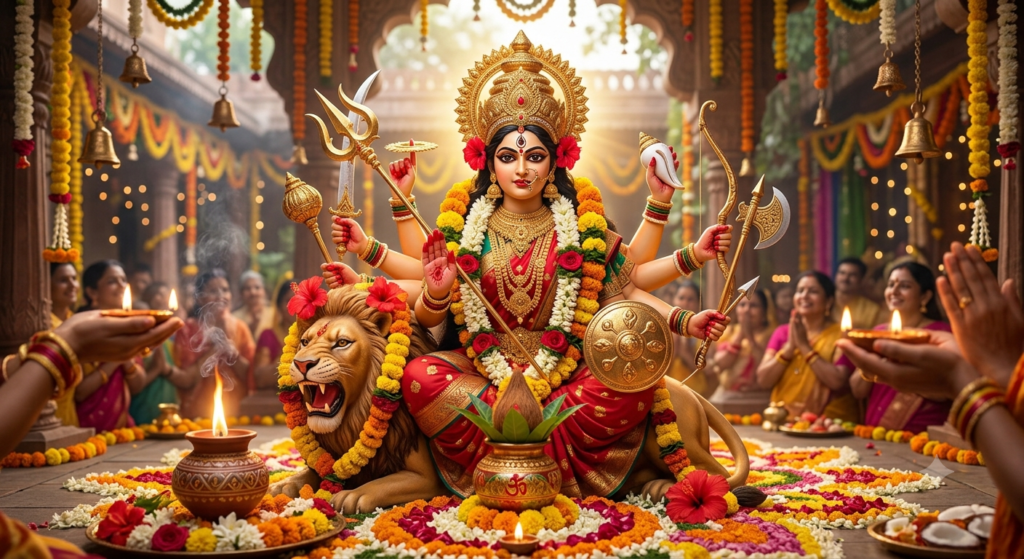
Durga Saptashati, also known as Devi Mahatmya or Chandi Path, is one of the most powerful scripture collections in Hinduism. Composed of 700 Sanskrit verses divided into 13 chapters, this sacred text celebrates the glory of Goddess Durga and her victory over the demons symbolizing negativity and inner weaknesses. Traditionally recited during Navratri and other auspicious occasions, Durga Saptashati is believed to bestow immense blessings, protection, and spiritual growth upon its devotees
Origin and Structure
Found in the ancient Markandeya Purana, Durga Saptashati narrates inspiring stories of Goddess Durga’s battles against Mahishasura, Shumbha-Nishumbha, and other demons. Each demon represents obstacles like ego, anger, and ignorance that obstruct human progress. The scripture starts with subsidiary texts like Kavach, Argala, and Keelak, and then moves into the main path – the 700 verses.
Spiritual Significance
Durga Saptashati isn’t just a tale of wars; it is a deep spiritual journey that guides seekers towards self-realization and inner transformation. The goddess’s triumph over demons embodies the victory of positive energies over negative forces — both in the world and within ourselves
Benefits of Chanting Durga Saptashati
- Protection: Reciting these verses is believed to ward off evil, negative influences, and even black magic. Devotees experience courage and a fearless attitude.
- Fulfillment of Wishes: Like a wish-fulfilling tree, the blessings of Goddess Durga can fulfill heartfelt desires and remove obstacles in life.
- Healing and Health: Many people chant Durga Saptashati for good health, happiness, and recovery from illness.
- Spiritual Growth: The practice helps foster wisdom (Saraswati), prosperity (Lakshmi), and strength (Parvati) within a devotee, bringing harmony and deeper spiritual insight.
- Prosperity and Wealth: The blessings extend to granting stable wealth, freedom from debts, and financial growth.
How to Recite Durga Saptashati
Traditional recitation is done with purity, devotion, and a sankalpa (specific intention). Rituals often include lighting a lamp, maintaining cleanliness, and chanting subsidiary mantras (Kavach, Argala Stotra, Keelak) before beginning the main chapters. Many families recite it together during Navratri, believing that group chanting amplifies the scriptural benefits.
Durga Saptashati in Daily Life
Whether you are an advanced devotee or a newcomer to spiritual practices, Durga Saptashati offers a path to self-mastery. By understanding the deeper meanings behind goddess’s battles, one can transform inner weaknesses into strengths and invite auspiciousness into everyday life.
Conclusion
Durga Saptashati is much more than a religious text; it is a source of divine inspiration and immense spiritual power. By embracing its teachings and chanting its verses, devotees awaken the Shakti within and manifest divine blessings in all aspects of their lives.
Key Takeaways:
- 700 verses in 13 chapters celebrating Goddess Durga’s victories
- Recitation brings protection, happiness, prosperity, and spiritual growth
- Central scripture for Navratri and Chandi Homa rituals
- Symbolizes triumph of good over evil, and inner transformation
Want to feel the embrace and protection of the Divine Mother? Begin your Durga Saptashati journey today!